 Send Inquiry
 +817026632377
 English
 Spanish
 French
 German
 Italian
 Chinese (Simplified)
 Japanese
 Korean
 Arabic
 Portuguese


 Send Inquiry
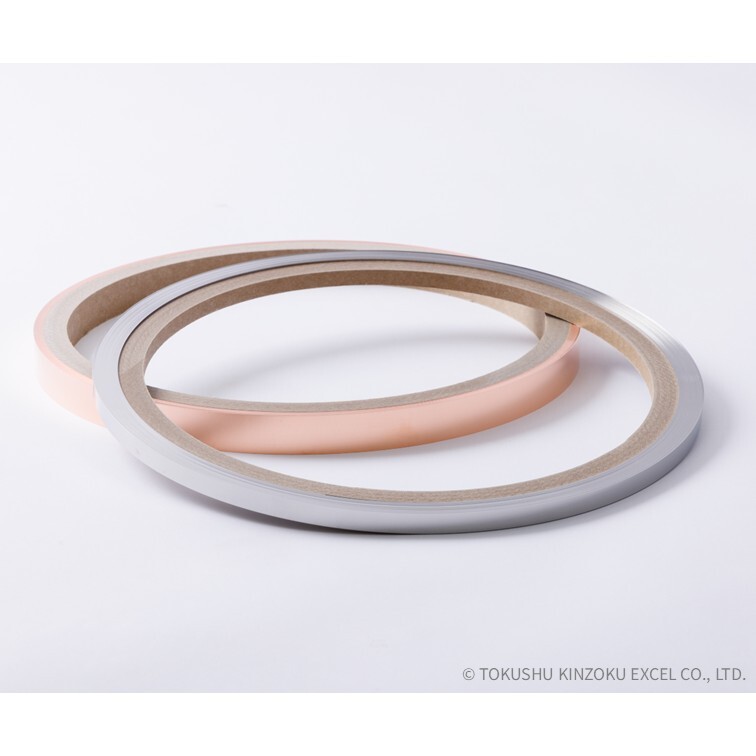
NCH-1 | Electrical Resistance alloy
MOQ : 100 Kilograms
NCH-1 | Electrical Resistance alloy Specification
- Width
- 3.0 - 300 Millimeter (mm)
- Temper
- Annealed, Skin Passed, As Rolled (Hard)
- Shape
- Coil, Sheet, (Wire, Bar)
- Application
- Resistors, Temperature Sensors, Fuses
- Surface
- Bright, Dull
- Thickness
- 0.040 - 1.8 Millimeter (mm)
- Grade
- NCH-1 (GNC108R)
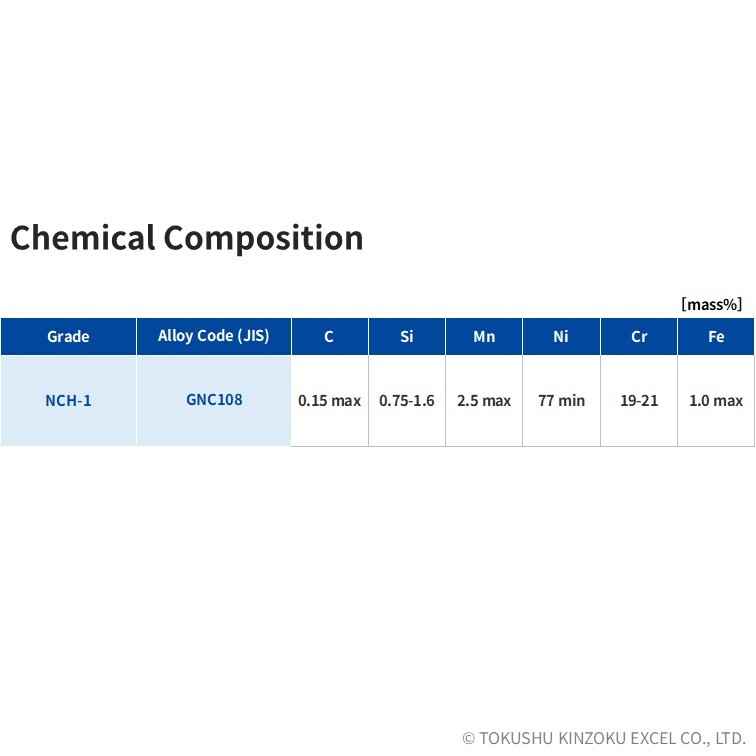
- Chemical Composition
- Refer to the image
NCH-1 | Electrical Resistance alloy Trade Information
- Minimum Order Quantity
- 100 Kilograms
- Packaging Details
- Our Standard Packing for Export
NCH-1 | Electrical Resistance alloy About
| Grade | NCH-1 (GNC108R) |
| Reference Standards (for reference only) | JIS GNC108R (C2532) DIN NiCr8020, 2.4869 GB Cr20Ni80 Other names ISA-CHROM 80 |
| Shape | Coil, Sheet, (Wire, Bar) |
| Thickness | 0.040 - 1.8 mm(Strip, Sheet) |
| Width | 3.0 - 300 mm(Strip, Sheet) |
| Length | Strip or Sheet(Length less than 2,000mm) |
| Technique | Cold Rolled |
| Temper | Annealed, Skin passed, As Rolled(Hard) |
| Surface | Bright, Dull |
| Application | Resistors, Temperature Sensors, Fuses |
| Coil I.D. | 300, 400, 500mm |
| Chemical Composition | Refer to the image |
| Density | 8.4 g/cm3 |
| Volume Resistivity | 1.08 micro-ohmmeter |
| Temperature Coefficient of Resistance | 50 ppm/K (23-100oC) |
| Magnetism | Non-magnetism |
| Minimum Order Quantity | 100 Kilograms |
| Country of Origin | Japan, China |
| Payment Terms | Telegraphic Transfer (T/T) |
| Delivery Terms | EXW, FOB, CIF, DAP etc. |
| Packaging Details | Our Standard Packing for Export |
| Main Export Market(s) | Asia, Middle East, North America, South America, Europe etc. |
NCH-1 Description :
NCH-1 is a high resistance alloy with a low TCR and excellent toughness, heat resistance and corrosion resistance. Its brazeability and solderability are inferior.
FAQ's of NCH-1 | Electrical Resistance alloy:
Q: How is NCH-1 electrical resistance alloy typically used in industry?
A: NCH-1 is widely used to manufacture resistors, temperature sensors, and fuses thanks to its precise electrical resistance properties and stable chemical composition.Q: What processing options are available for NCH-1 alloy?
A: NCH-1 can be supplied in annealed, skin passed, or as rolled (hard) tempers, and can undergo additional finishing for bright or dull surfaces, allowing adaptation to specific project requirements.Q: When should I opt for NCH-1 over other resistance alloys?
A: Choose NCH-1 when uniformity, reliability, and customization are essential-especially in high-precision electrical applications requiring dependable resistance and chemical stability.Q: Where is NCH-1 manufactured and exported from?
A: NCH-1 is produced in Japan and is available for supply to global markets in various forms including coils, sheets, wires, and bars.Q: What benefits does NCH-1 provide compared to general-purpose resistance alloys?
A: NCH-1 offers greater consistency in resistance values, a range of customizable physical formats, and excellent durability, making it suitable for high-accuracy applications.Q: How does the shape and thickness of NCH-1 impact its application?
A: The choice between coil, sheet, wire, or bar-as well as tailored thickness and width-enables optimal integration of NCH-1 into specific electrical and thermal management designs.
Tell us about your requirement

Price:
Quantity
Select Unit
- 50
- 100
- 200
- 250
- 500
- 1000+
Additional detail
Mobile number
Email

More Products in Electrical Resistance Alloys Category
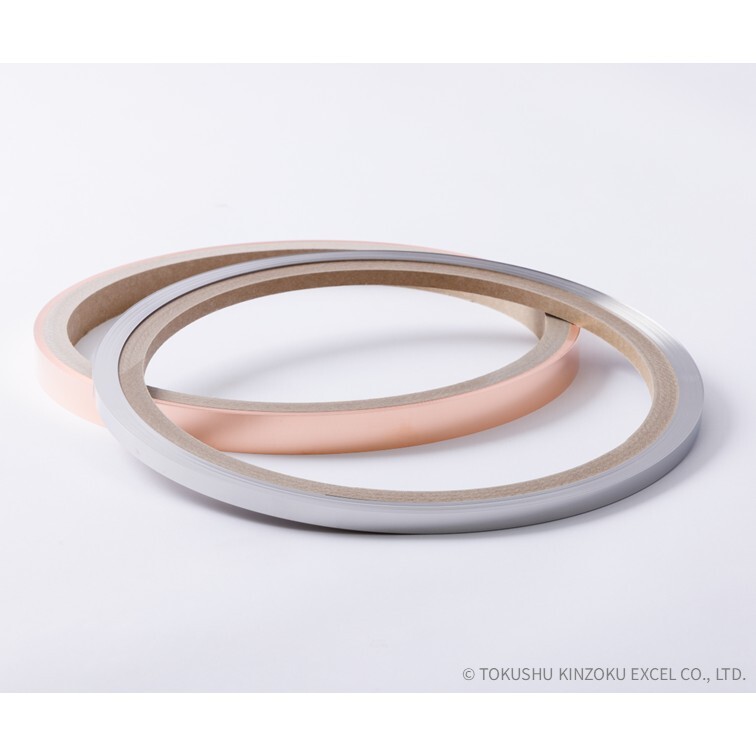
CN30 | Electrical Resistance alloy
Minimum Order Quantity : 100 Kilograms
Application : Resistors, Temperature Sensors, Fuses
Shape : Coil, Sheet, (Wire, Bar)
Surface : Bright, Dull
Chemical Composition : Refer to the image
Grade : CN30
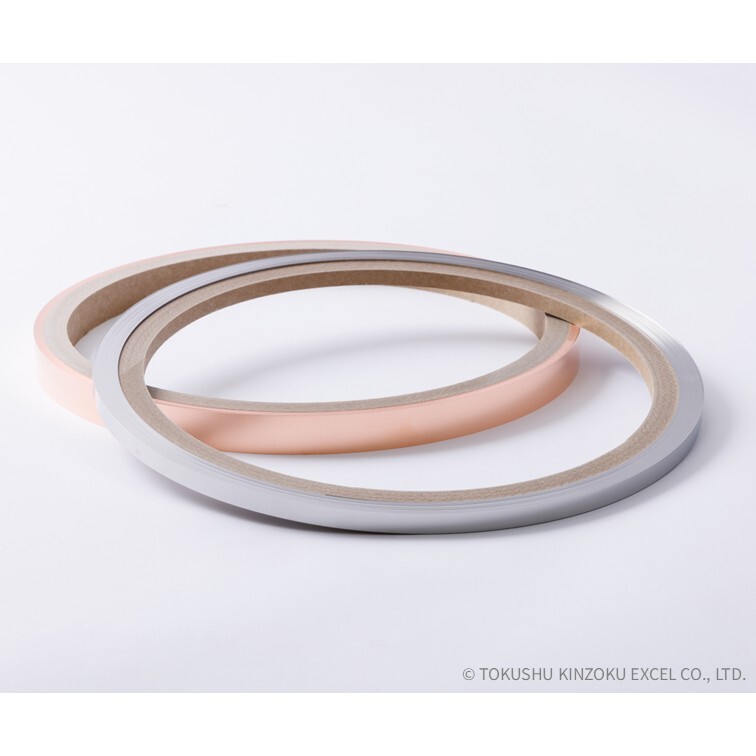
MANGANIN | Electrical Resistance alloy
Minimum Order Quantity : 100 Kilograms
Application : Resistors, Temperature Sensors, Fuses
Shape : Coil, Sheet, (Wire, Bar)
Surface : Bright, Dull
Chemical Composition : Refer to the image
Grade : MANGANIN
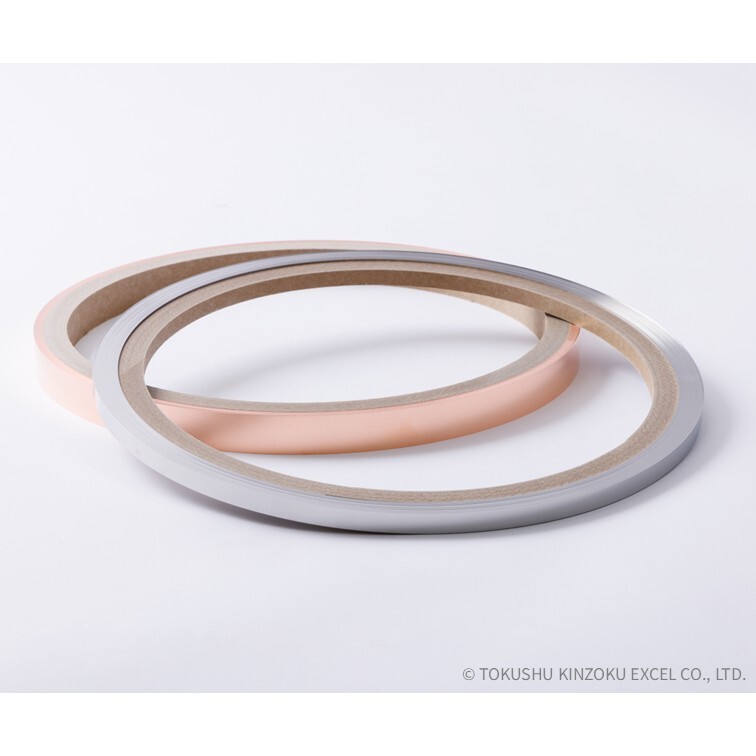
ZERANIN 30 | Electrical Resistance alloy
Minimum Order Quantity : 100 Kilograms
Application : Resistors, Temperature Sensors, Fuses
Shape : Coil, Sheet, (Wire, Bar)
Surface : Bright, Dull
Chemical Composition : Refer to the image
Grade : ZERANIN 30
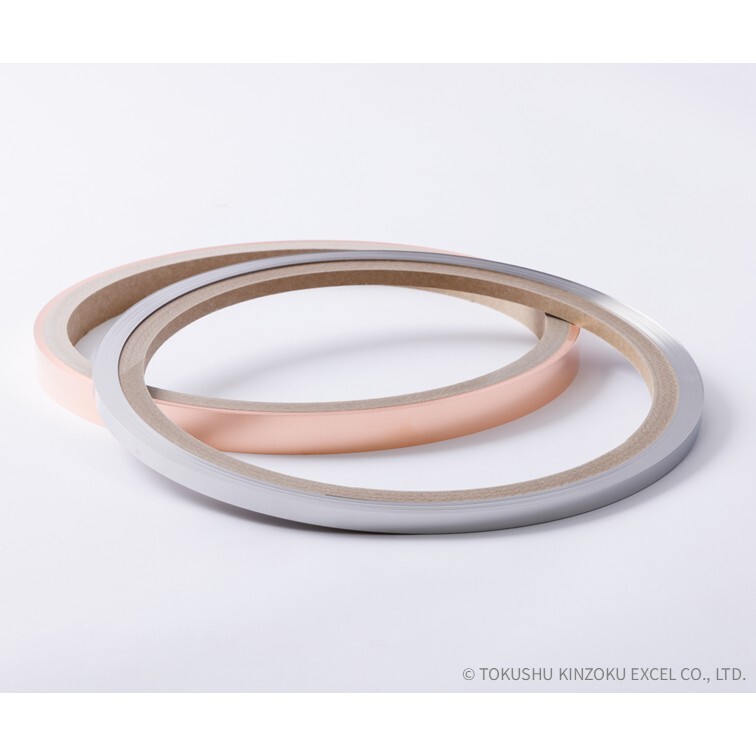
CN49 | Electrical Resistance alloy
Minimum Order Quantity : 100 Kilograms
Application : Resistors, Temperature Sensors, Fuses
Shape : Coil, Sheet, (Wire, Bar)
Surface : Bright, Dull
Chemical Composition : Refer to the image
Grade : CN49

TOKUSHU KINZOKU EXCEL CO., LTD.
Contact Details
- 6F Mejiro Hakubutsukan Bldg., 1-4-25 Mejiro, Toshima-ku,Tokyo - 1710031, Japan
- Phone : +81-3-69129232
- Mr Takao Sueyoshi (Manager)
- Mobile : +817026632377, +817014150872
- Send Inquiry

 Send Inquiry
 |
TOKUSHU KINZOKU EXCEL CO., LTD.
All Rights Reserved.(Terms of Use) Developed and Managed by Infocom Network Private Limited. |
