 Send Inquiry
 +817026632377
 English
 Spanish
 French
 German
 Italian
 Chinese (Simplified)
 Japanese
 Korean
 Arabic
 Portuguese


 Send Inquiry
Clad Metals (A composite of two or more dissimilar metals)
Clad Metals (A composite of two or more dissimilar metals) Specification
- Thickness
- 0.040 - 1.2 Millimeter (mm)
- Width
- 5.0 - 140 Millimeter (mm)
- Shape
- Coil
- Application
- Other
- Coil I.D.
- 300, 400, 561 mm
- Molten Solder Layer
- Present
- Multi-Layer Construction
- Yes
- Minimum Order Quantity
- 30 Kilograms
- Packaging Details
- Standard Packing Export
- Length
- Strip
- Delivery Terms
- EXW, FOB, CIF, DAP
- Main Export Market(s)
- Asia, Middle East, North America, South America, Europe
Clad Metals (A composite of two or more dissimilar metals) Trade Information
- Packaging Details
- Our Standard Packing for Export
Clad Metals (A composite of two or more dissimilar metals) About
| Main Added Properties of Composite Metal Material | Conductivity, Electrical Resistance, Thermal Conductivity, High Strength, Spring Properties, Light Weighting, Magnetism, Workability, Thermal Expansion |
| Shape | Coil |
| Thickness | 0.040-1.2mm(Strip, Sheet) |
| Width | 5.0-140mm(Strip, Sheet) |
| Length | Strip |
| Coil I.D. | 300, 400, 500mm |
| Minimum Order Quantity | 30 Kilograms |
| Country of Origin | Japan |
| Payment Terms | Telegraphic Transfer (T/T) |
| Delivery Terms | EXW, FOB, CIF, DAP etc. |
| Packaging Details | Our Standard Packing for Export |
| Main Export Market(s) | Asia, Middle East, North America, South America, Europe etc. |
Clad Metals (A composite of two or more dissimilar metals) Description:
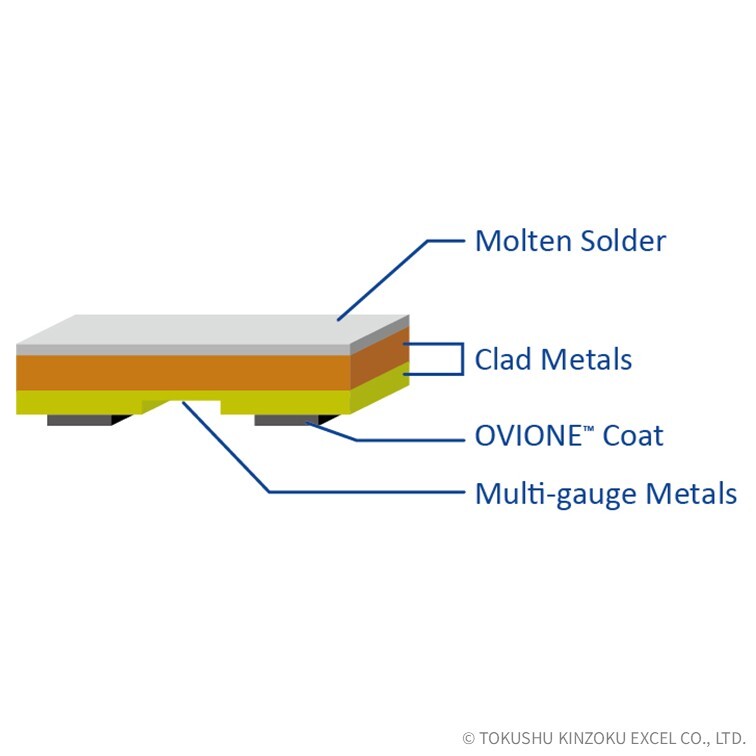
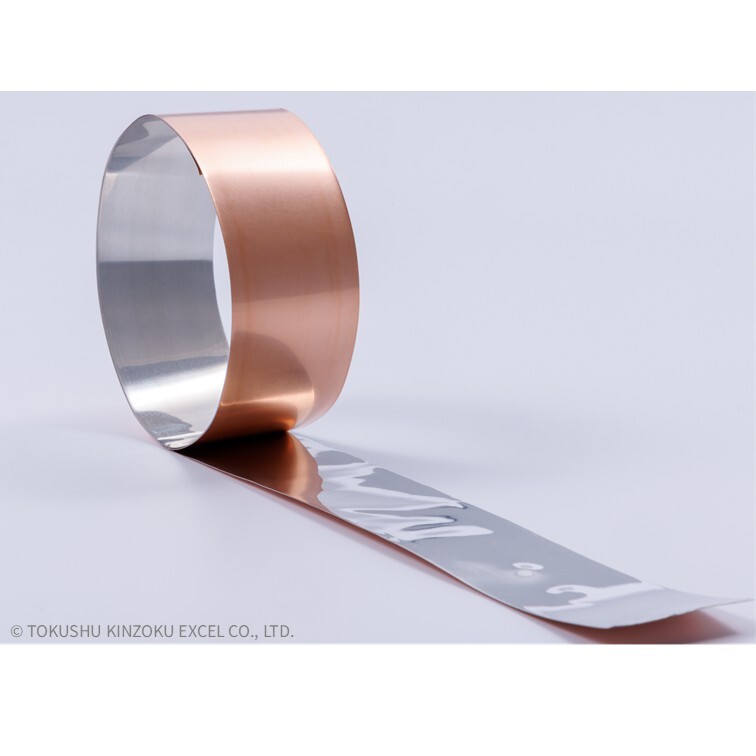
Clad Metals are the materials consisting of two or more different metals bonded together. It is a highly functional metal material with composite properties that cannot be obtained with a single material.
In Clad Metals, the boundary surfaces between dissimilar metals are diffusion bonded (alloyed by elemental diffusion), so there is less concern about delamination as in plating.
The main features of Clad Metals:
(1) Various combinations are possible
(2) High flexibility in thickness ratio of base material and cladding material
(3) Multi-layer lamination is possible, not limited to two layers.
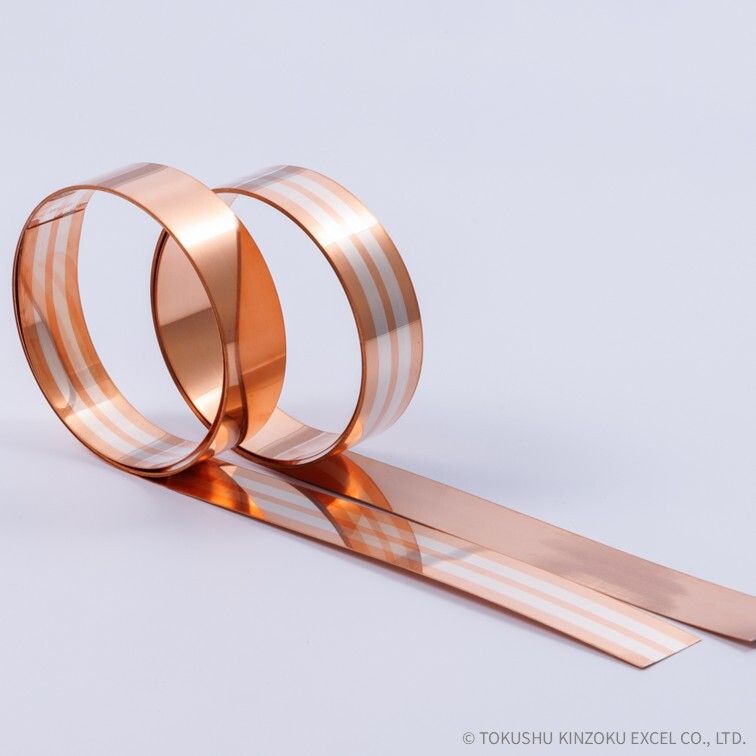
(4) Striped inlay cladding is also available.
Clad Metals can help reduce total costs by reducing processes and lead time and improving quality.
FAQ's of Clad Metals (A composite of two or more dissimilar metals):
Q: How are clad metals produced and what is their main advantage?
A: Clad metals are manufactured by bonding two or more dissimilar metals through controlled heat and pressure processes. This technique combines each metal's individual properties, resulting in a product that excels in strength, conductivity, and durability compared to single-metal materials.Q: What applications are suited for your clad metal coils and strips?
A: These materials are widely utilized for electrical conductivity, resistance management, enhanced thermal properties, high-strength components, spring mechanisms, lightweight structures, and improved magnetism. They are ideal for use in electrical, automotive, aerospace, and industrial machinery applications.Q: When should I choose multi-layer clad metals over traditional single-metal materials?
A: Multi-layer clad metals are preferred when applications demand a unique combination of properties, such as high strength coupled with excellent electrical or thermal conductivity, a specific surface finish, or tailored workability that cannot be achieved with conventional metals.Q: Where are your clad metal products exported?
A: We supply clad metals to major markets worldwide, including Asia, the Middle East, North America, South America, and Europe, ensuring compliance with international quality and packaging standards.Q: What is the minimum order quantity and available coil sizes?
A: The minimum order is 30 kilograms, and you can select coils with inner diameters of 300 mm, 400 mm, or 561 mm. Widths range from 5.0 mm to 140 mm and thicknesses from 0.040 mm to 1.2 mm, offering flexibility for various industrial needs.Q: How does the OVIONETM coat enhance the product's surface?
A: The OVIONETM surface coat provides the clad metal with extra resistance to corrosion, improved durability, and superior workability, making it suitable for both demanding manufacturing processes and environments with strict quality requirements.Q: What delivery and packaging options are available for international customers?
A: We offer delivery terms including EXW, FOB, CIF, and DAP, with each order packed using standard export methods to ensure safe and reliable shipment worldwide.
Tell us about your requirement

Price:
Quantity
Select Unit
- 50
- 100
- 200
- 250
- 500
- 1000+
Additional detail
Mobile number
Email

More Products in Composite Metal Materials Category
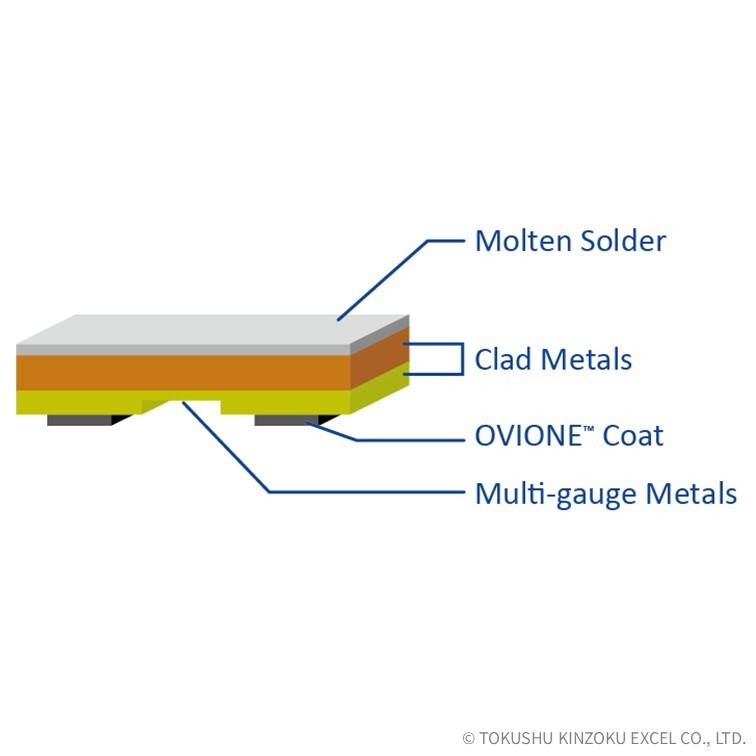
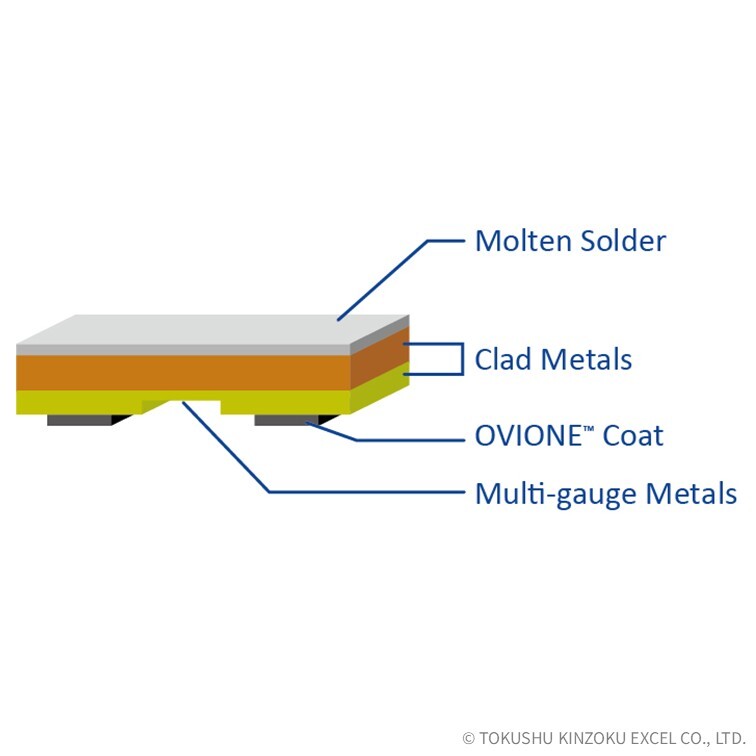
SOLDER | Molten-Solder Clad Metals
Application : Other
Shape : Coil
Thickness : Please contact us.
Width : 3.0300 Millimeter (mm)
Surface : MoltenSolder Clad
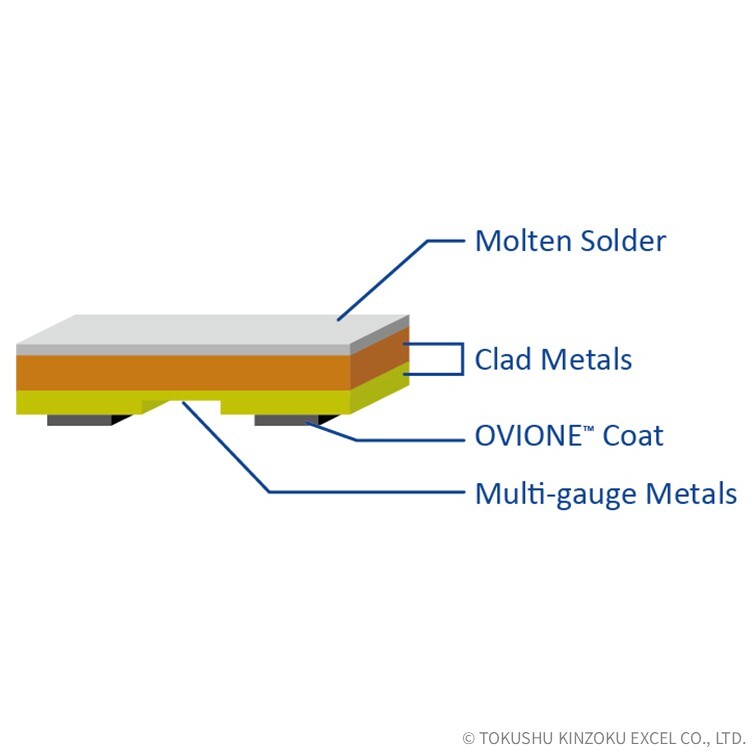
OVIONE Coat | Functional pre-coated metals
Application : Other
Shape : Coil
Thickness : 0.10 0.60 Millimeter (mm)
Width : 3.0 300 Millimeter (mm)
Surface : Functional resin coated

TOKUSHU KINZOKU EXCEL CO., LTD.
Contact Details
- 6F Mejiro Hakubutsukan Bldg., 1-4-25 Mejiro, Toshima-ku,Tokyo - 1710031, Japan
- Phone : +81-3-69129232
- Mr Takao Sueyoshi (Manager)
- Mobile : +817026632377, +817014150872
- Send Inquiry

 Send Inquiry
 |
TOKUSHU KINZOKU EXCEL CO., LTD.
All Rights Reserved.(Terms of Use) Developed and Managed by Infocom Network Private Limited. |
