 Send Inquiry
 +817026632377
 English
 Spanish
 French
 German
 Italian
 Chinese (Simplified)
 Japanese
 Korean
 Arabic
 Portuguese


 Send Inquiry
Plated Rolled Materials
Plated Rolled Materials Specification
- Chemical Composition
- Refer to the image
- Shape
- Coil
- Application
- FPC, Steering Parts, Capacitors, Connectors, Switches, Inductors
- Thickness
- Please contact us.
Plated Rolled Materials Trade Information
- Packaging Details
- Standard Export Packing
Plated Rolled Materials About
| Shapes | Coil |
| Thickness | Please contact us. |
| Examples of Applications | FPC, Steering Parts, Capacitors, Connectors, Switches, Inductors |
| Coil I.D. | 300, 400, 500mm |
| Minimum Order Quantity | Please contact us. |
| Country of Origin | Japan |
| Payment Terms | Telegraphic Transfer (T/T) |
| Delivery Terms | EXW, FOB, CIF, DAP etc. |
| Packing | Our Standard Packing for Export |
| Export Markets | Asia, Middle East, North America, South America, Europe etc. |
Plated Rolled Materials Description :
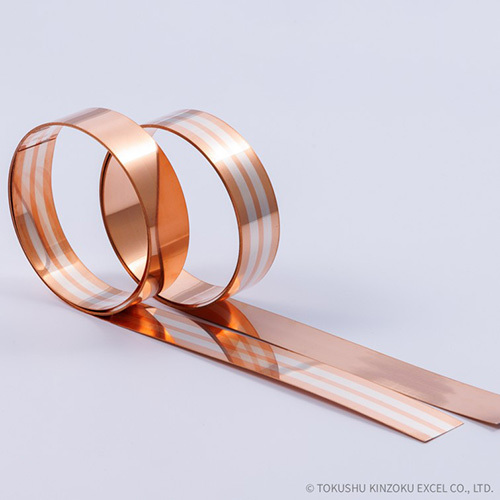
Electrolytic plating on hoop materials (coils and strips) prior to stamping is also available.
Although the plating process itself is outsourced, we will select the most suitable material and outsourcing company depending on the type, quantity, and application of the plating.
Of course, we provide final quality assurance including material and post plating process.
Features of our plating materials:
(1) Comprehensive management including materials and plating.
(2) Combination of cold rolling and heat treatment on plated materials improves adhesion compared to normal plated materials
(3) Our experience with many plating manufacturers enables us to select the most suitable partner.
Tell us about your requirement

Price:
Quantity
Select Unit
- 50
- 100
- 200
- 250
- 500
- 1000+
Additional detail
Mobile number
Email

More Products in Surface And Edge Treatment Category
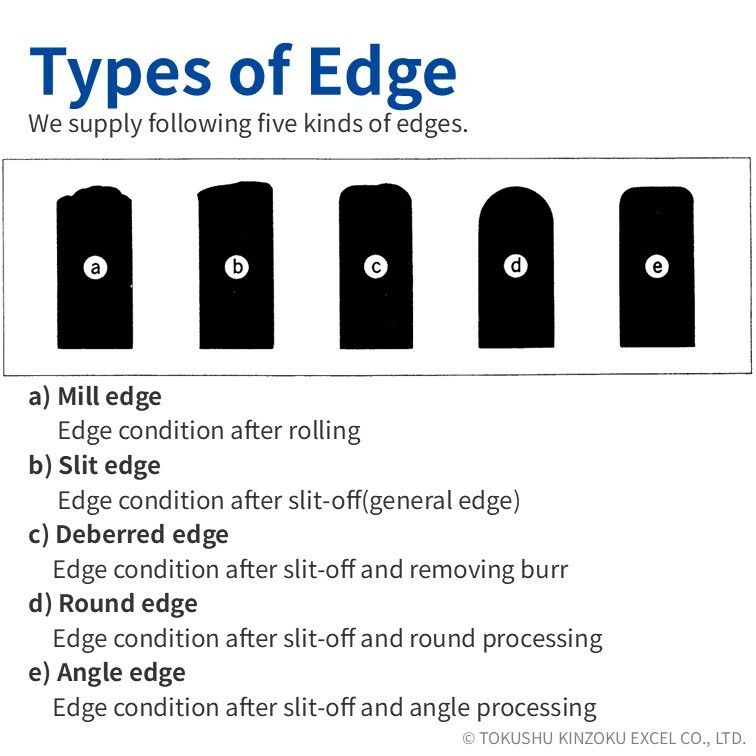
Edge Treatment - Round Edge Debarred Edge
Chemical Composition : Refer to the image
Width : Debarred edge: 5.0 70.0, Round edge/Angle edge: 8.0 40 Millimeter (mm)
Shape : Coil
Thickness : Deburred edge: 0.10 1.00 , Round edge / Angle edge: 0.15 1.5 Millimeter (mm)
Application : Springs, Quartz Crystals, Industrial Cutting Tools, Knitting Needles, Tape Measures, Pen Clips, Design Parts, Ride Door Springs

TOKUSHU KINZOKU EXCEL CO., LTD.
Contact Details
- 6F Mejiro Hakubutsukan Bldg., 1-4-25 Mejiro, Toshima-ku,Tokyo - 1710031, Japan
- Phone : +81-3-69129232
- Mr Takao Sueyoshi (Manager)
- Mobile : +817026632377, +817014150872
- Send Inquiry

 Send Inquiry
 |
TOKUSHU KINZOKU EXCEL CO., LTD.
All Rights Reserved.(Terms of Use) Developed and Managed by Infocom Network Private Limited. |
